LOVO AI Voice: Full Review & Best Alternatives
LOVO AI built something genuine. The platform, now centered on its Genny editor, delivers a professional voiceover studio with 500+ AI voices across more than 100 languages, a built-in video editor with audio sync, voice cloning, granular pronunciation controls, and emotional delivery settings that most TTS platforms haven't bothered to develop. For e-learning teams, marketing producers, corporate communicators, and informational YouTube channels, it's a serious tool worth serious evaluation.
That said, the AI voice market now splits clearly between professional narration tools and character or celebrity voice tools. They share a label. They don't serve the same people. LOVO belongs firmly in the professional narration camp. Knowing that distinction before you start evaluating saves you significant time.
This review covers everything. What LOVO actually is, how the Genny editor works, what voice quality looks like in practice, how the feature set compares to alternatives, how pricing is structured, where the platform wins, and where it runs into limits. By the end, you'll know whether LOVO fits your workflow or whether something else is the better choice.
One important distinction upfront: LOVO AI and TryAIVoices serve different purposes. LOVO produces original professional AI voices for business and creative production. TryAIVoices specializes in celebrity impressions and character voices for entertainment content. If you searched for "lovo ai voice" because you want audio that sounds like Trump, Obama, Morgan Freeman, Spongebob, or Batman, that distinction shapes everything you need to know about whether LOVO can help.
What is LOVO AI?
LOVO AI launched with a focused pitch: professional AI voiceover for content producers at scale. The premise came from a real problem. Professional voice production was expensive, slow, and revision-heavy. Book studio time. Source talent. Manage multiple recording sessions every time a script changed. For content teams producing large volumes of training modules, explainer videos, marketing content, and course narration, that model wasn't sustainable.
LOVO's answer was a full AI voiceover platform. Generate studio-quality narration from text. Update scripts without re-recording sessions. Scale production to match content demand. The proposition worked. LOVO has grown into one of the more established names in the professional AI TTS space.
The company operates under both the LOVO and Genny brand names. LOVO is the underlying AI voice technology and platform identity. Genny is the consumer-facing product built on that technology, the interface most users actually work in. When people search for "lovo ai voice" or "lovo ai voices," they're typically looking for what Genny delivers: a browser-based studio where you pick voices, write scripts, edit audio, and produce finished narration or video.
The Genny editor: what the product actually looks like
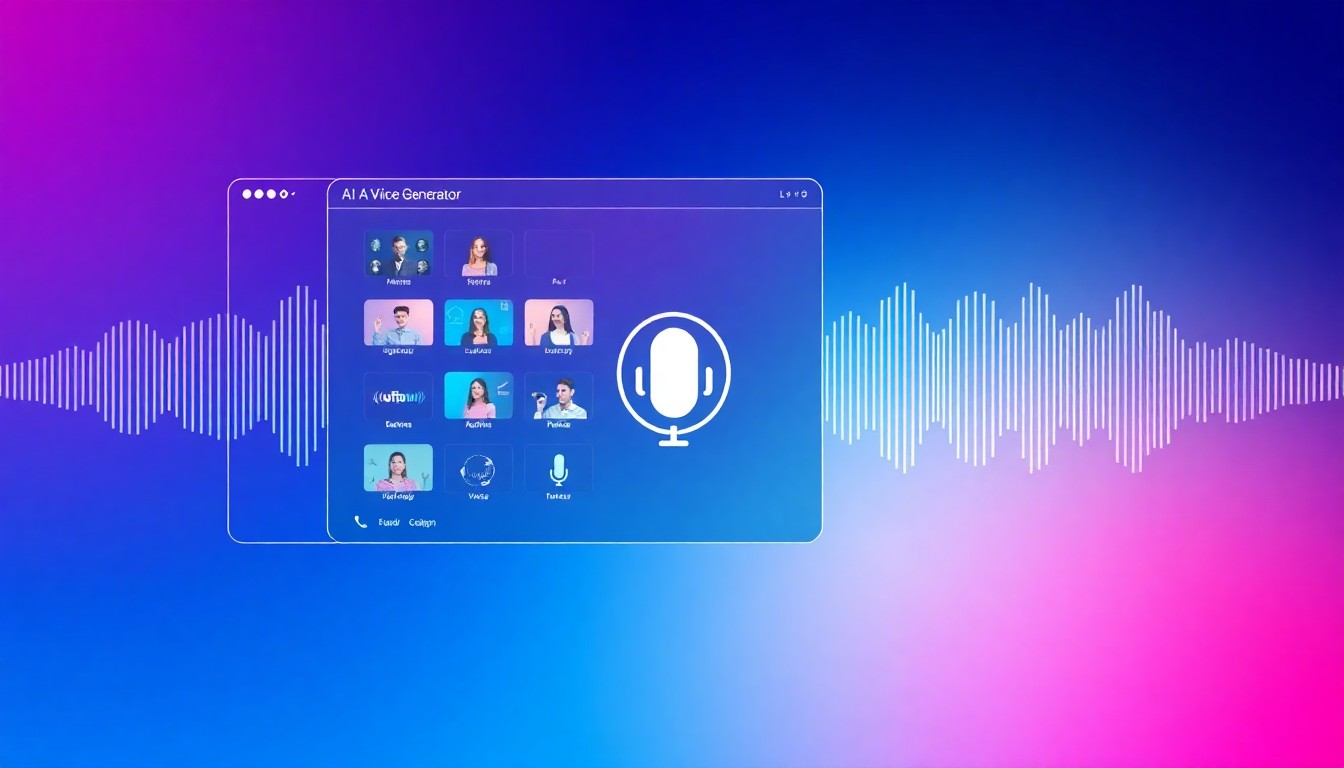
Genny's editor is where all the production happens. It's browser-based. No software download. No installation. You open a project, write or paste your script, select a voice, and generate audio. The interface is closer to a lightweight content studio than a plain TTS tool.
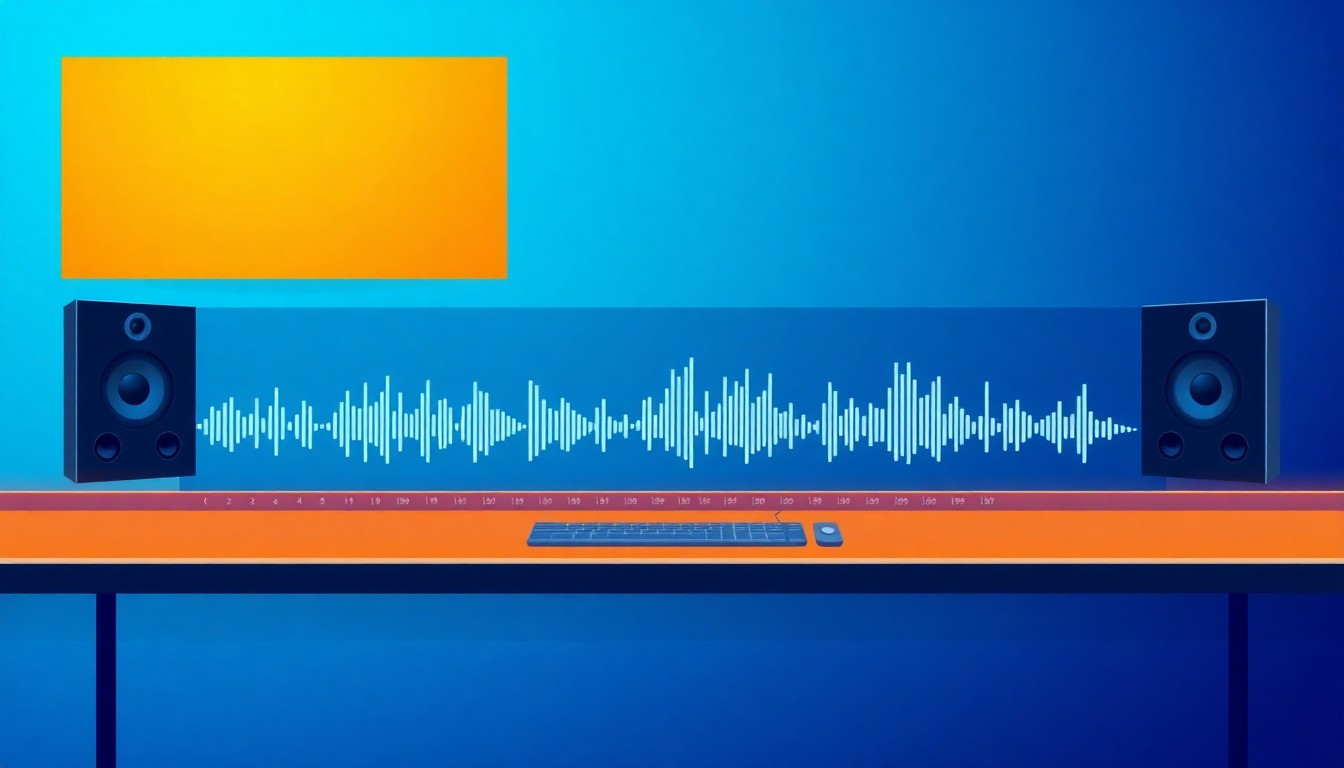
Scripts sit in an editable document view. Generated audio appears with a visual timeline. Playback, download, and share options are immediately accessible. The editor supports multiple scenes in a project, each with different voice assignments, text, and audio segments. Drag-and-drop timing control lets you adjust how segments align. If you're syncing narration to video, the video goes on the timeline alongside the audio and you line them up in the editor. This is a meaningful production feature for teams who would otherwise generate audio in one tool and sync it in another.
Beyond voice generation, Genny adds image generation directly into the interface. If you need visuals to accompany narration, you can generate them without leaving the platform. For teams producing slides, explainer frames, or visual assets alongside voice content, this reduces the number of tools in the workflow.
Who LOVO AI is built for
The platform targets content production teams, not individual experimental users. E-learning developers building course libraries. Marketing teams producing explainer videos. Corporate communications teams creating training and onboarding content. Podcasters building AI-assisted production workflows. YouTube creators producing narrated informational content at scale.
The feature decisions reflect this focus. Emphasis controls, pronunciation dictionaries, multi-scene editors, and video sync tools are the choices of a platform designed for professional production. They're not features that casual users typically prioritize.
 Photo via Unsplash
How LOVO's AI voice technology works
LOVO's voice models are built on neural text-to-speech architecture. The models learn speech patterns from large training datasets. Given text input, the model generates audio that replicates the prosody, pacing, and voice characteristics it learned from that training. The result is synthetic speech that sounds natural rather than robotic.
The key differentiator LOVO built is emotional control. Most TTS platforms let you pick a voice and generate audio. LOVO goes further: you specify the emotional register of the delivery. Voices in Genny support states like happy, sad, angry, excited, neutral, and others depending on the specific voice. The emotional variation isn't just volume or speed changes. The model actually shifts prosody and delivery pattern to match the specified emotional state.
This matters for storytelling content, educational material with emotional context, marketing videos that need brand energy, and any narration where flat neutral delivery undermines the content's impact.
Pronunciation and emphasis controls
Professional narration often hits problems at proper nouns, technical terms, acronyms, brand names, and foreign-language words. TTS models default to phonetic guesses for unfamiliar words. Those guesses are often wrong. LOVO addresses this with a pronunciation dictionary where you define exactly how unusual words should sound.
The emphasis control works at the word level. You can mark specific words for stronger delivery, instructing the model to treat them as high-emphasis content. For scripts where you know exactly which words carry the weight of the sentence, this kind of granular control produces noticeably better results than relying entirely on model inference.
These controls are part of what makes LOVO worth evaluating for professional production. The difference between a model guessing how to handle a technical script and a model where you've specified key pronunciations and emphasis points is audible in the finished output.
Voice cloning
LOVO supports voice cloning on higher-tier plans. You record yourself reading provided text, upload the audio, and the platform trains a custom voice model based on your recordings. The result is a synthetic voice that sounds like you, usable across all your projects without recording every segment.
The cloning process requires a minimum recording length. More audio produces better quality. Clean recording conditions, minimal background noise, consistent microphone placement, and consistent speaking pace all affect clone quality. Well-recorded clones can be very convincing. Clones built from noisy or inconsistent recordings carry noticeable artifacts.
For brands with an established voice identity, or podcasters who want to maintain consistent delivery across AI-assisted production, cloning is genuinely useful. It's not a shortcut to sounding like someone famous. LOVO's cloning is designed for capturing and reusing your own voice, not impersonating others. That's a meaningful distinction.
API access
LOVO offers API access for developers and enterprises integrating AI voice into applications or automated workflows. The API supports voice selection, text input, and audio generation with programmatic control. For teams building content pipelines, automated narration systems, or applications with voice output, the API extends LOVO's capability beyond the Genny interface.
Response times and rate limits vary by plan tier. Enterprise customers get higher rate limits and dedicated infrastructure. For development and low-to-moderate volume applications, the API is accessible with standard plan access.
The LOVO AI voice library
Five hundred plus voices across more than 100 languages is the headline number. But raw volume doesn't tell you much without understanding what those voices actually are and who they're designed for.
Voice categories and styles
LOVO's library organizes by language, gender, accent, and style. English voices cover American, British, Australian, and other regional accents. The style range runs from neutral professional narrators through energetic marketing voices, young conversational deliveries, authoritative news-reader styles, and character-appropriate options for different content types.
For professional content production, the library's breadth is a genuine asset. Different content types need different voice personalities. A corporate training module on compliance needs a different voice than a marketing video for a youth brand. A documentary narration sounds different from a podcast intro. The library has enough range to match voice to context accurately.
Language support extends beyond English with solid coverage across major European languages: French, German, Spanish (both Castilian and Latin American variants), Italian, Portuguese, Dutch. Asian language coverage includes Japanese, Korean, Mandarin, Hindi. Regional variations within languages add granularity for creators producing content for specific markets. British English for the UK. Australian English for Australia. The differences matter to regional audiences in ways that generic options can't address.
Emotional voice states
The emotional variation in LOVO's voices is where the library earns distinction. Most professional TTS libraries offer voices in one or two styles. LOVO's voices support multiple emotional states per voice. The same voice character delivers content differently depending on the emotional register you set.
For educational content, this means the same consistent narrator can sound warm and encouraging in an introduction, authoritative in a technical explanation, and enthusiastic when introducing an exercise. The voice identity stays consistent while the emotional delivery adapts to the content context. That's a meaningful differentiator.
Learn more about how AI voice platforms vary their delivery in the how to make text to speech guide.
What the library doesn't include
This is important. Every voice in LOVO's library is an original AI-created identity. None of the voices are celebrity impersonations. None are designed to replicate real people.
If your content requires audio that sounds like Spongebob, Peter Griffin, Arnold Schwarzenegger, Ariana Grande, or Obama, LOVO can't produce that. The platform made deliberate choices to stay in the territory of original synthetic voice identities. That's the right decision for professional production use cases. But for content that lives or dies on the recognition factor of a specific famous voice, it's a hard stop that no amount of quality evaluation can resolve.
Platforms like TryAIVoices exist specifically for that use case. The celebrity voice library, cartoon character voices, politician voices, movie character voices, and gaming voices fill a different creative need than original professional narration. The TryAIVoices voice library is where that search ends. The celebrity AI voice generators guide covers this category in depth.
 Photo via Unsplash
Genny editor and key features
The Genny interface is LOVO's main differentiator from plain TTS tools. It's a production studio, not a paste-and-download interface.
Video sync and editing
Genny lets you import video directly into a project. Audio and video live on the same timeline. You position narration segments to align with specific video moments, trim for timing, and preview the combined output without exporting to a separate editing tool.
For teams producing marketing videos, explainer animations, course content with screen recordings, or any video that needs synchronized narration, this removes a workflow step. You don't have to generate audio in LOVO and then import it into a separate video editor for sync. You do it in Genny.
The editing tools aren't as deep as dedicated video production software. Complex video work with transitions, effects, color grading, and multi-track audio still requires a dedicated editor. But for narration sync on straightforward video projects, Genny's built-in tools handle the workflow adequately.
Multi-voice scene organization
Projects in Genny support multiple scenes, each with different voice assignments. A training course can have an intro scene with one voice, a technical content section with another, and a summary section with the original narrator returning. A podcast-style production can assign different voices to different speakers.
This feature matters most for long-form content with structured sections. Building and navigating a structured multi-voice production in Genny is more organized than managing multiple separate audio files for different sections.
Pronunciation dictionary
The pronunciation dictionary lets you define custom phonetic rules for words the AI model consistently mispronounces. You write the word, write the intended pronunciation in phonetic notation, and save it to your project or account library. Future generations apply your pronunciation rules automatically.
For technical industries, medical content, legal material, or any domain with specialized terminology, this is a significant productivity feature. You build the dictionary once and stop correcting the same mispronunciation on every project. That compounds quickly for heavy users.
Emphasis and pacing controls
Genny lets you adjust speed and pitch at the segment level. You can slow down a complex technical explanation and speed up an energetic marketing section within the same project. Emphasis markers on individual words tell the model to deliver those words with stronger prosodic weight.
Combining these controls with the emotional state settings gives you considerable influence over the final delivery without requiring the AI model to infer your intent from plain text alone. Explicit controls produce more predictable, professional output than hoping the model guesses your intended phrasing.
Art generation
Genny includes an AI image generator. You describe the image you need, the tool generates it, and you incorporate it directly into your project. For producers who want to avoid switching between multiple tools during production, it saves context-switching. For users with existing image workflows and dedicated design tools, it's easy to ignore.
LOVO AI pricing and plans
LOVO AI offers tiered subscription plans, with a free tier providing limited access and paid plans unlocking the full feature set.
Free plan
The free tier gives new users access to a limited set of voices and a monthly character allowance that's enough to test the platform's basic voice quality and editor interface. It's not designed for production use, but it works for evaluation. You can confirm whether the platform's voice quality meets your needs before paying.
This is worth noting separately. LOVO AI's free tier is a real evaluation tool. TryAIVoices operates differently, with Starter, Pro, and Unlimited subscription plans that give subscribers credits for audio generation. Details are on the pricing page. Both platforms expect paying subscribers for serious production use.
Creator and Professional plans
The paid plans scale in monthly character output, voice selection breadth, download quality, feature access, and commercial use rights. Creator plans typically unlock the broader voice library, higher character limits, and downloadable audio for commercial projects. Professional plans add voice cloning, API access, higher monthly limits, and priority support.
LOVO's paid plan pricing is competitive within the professional TTS market. Check LOVO's current pricing directly, since platform pricing shifts regularly. The structure follows a familiar pattern: individual creator tier for solo producers, professional tier for serious production work, and enterprise pricing for teams and high-volume use cases.
Commercial licensing
One detail worth understanding: commercial use rights vary by plan. The free tier typically doesn't grant commercial licensing for generated audio. Paid plans do. If you're producing content for clients, publishing monetized videos, or using generated narration in products for sale, a paid plan is necessary. Read the plan terms carefully before assuming commercial use is covered.
For a look at how subscription plans compare across platforms, the AI voice generator for YouTube guide breaks down how different pricing models work for creator use cases.
Character limit economics
The monthly character limit model is worth thinking through carefully before subscribing. Character limits create a ceiling that shows up faster than users expect during heavy production periods. A plan that seems generous for occasional use can run short quickly during busy content schedules.
Unlike some platforms with rollover credits, monthly resets mean unused characters from a slow month don't carry into a busier one. For predictable moderate production schedules, the economics work. For bursty production patterns, plan allocation efficiency becomes a real consideration.
Best use cases for LOVO AI voice
LOVO earns genuine recommendations in specific workflows. Here's where the platform reliably delivers.
Marketing video production
Genny's video sync tools make LOVO particularly well-suited for marketing video production. You write a script, generate narration, import your video footage or animation, sync audio to video in Genny's timeline, and export. For teams producing product demos, explainer videos, brand content, and promotional material at volume, compressing that workflow matters.
The emotional range of LOVO's voices adds to the case for marketing use. Marketing narration often needs energy, warmth, urgency, or authority, sometimes shifting between states within a single video. Having that emotional control at the generation stage, rather than relying on a voice actor's natural interpretation, gives production teams more predictable control over the final output.
For anyone comparing AI voice tools for marketing production, the best AI voice generators for characters and celebrities roundup covers the broader market landscape.
E-learning and corporate training
Consistent professional narration across large course libraries is where LOVO's stability and controls shine most clearly. The pronunciation dictionary handles domain-specific terminology. The emotional voice states make educational delivery more engaging than flat neutral narration. The ability to update individual segments when course content changes is a significant operational advantage over re-recording sessions.
For instructional designers and L&D teams, AI voiceover has become a standard production accelerator. Content that used to require booking a voice actor and scheduling revisions can now be turned around in hours. LOVO handles the workflow and the quality bar for most professional training applications.
The how to make text to speech guide covers how AI voice fits different creative contexts and what separates professional narration tools from entertainment-focused platforms.
YouTube narration channels
Informational YouTube channels producing content about history, technology, science, finance, or any knowledge-driven topic use AI narration to scale production. LOVO's voice quality is solid for this use case, and the multi-scene editor helps organize long-form video narration efficiently.
The AI voice generator for YouTube guide goes deeper on what makes AI narration work on different types of YouTube content. The short version: informational content benefits from consistent professional narration. Entertainment content built on recognizable voice personalities needs a different kind of platform.
For YouTube creators, the distinction between LOVO and character voice platforms becomes clear quickly. TryAIVoices serves creators building content around iconic voices: Morgan Freeman narration, Trump commentary, Spongebob reactions, and Batman voice content. LOVO serves creators who need high-quality original narration at production scale. These are different channels serving different audiences.
Podcast production and audio content
LOVO's voice quality and character consistency across long documents make it viable for podcast-length audio. If you're producing narrated podcast content from written scripts, a LOVO-generated narrator voice can maintain consistent delivery across a 30 or 45-minute episode without the quality drift that affects some TTS systems on long documents.
Combined with voice cloning for established podcasters who want to maintain their own voice identity, LOVO covers the podcast use case reasonably well. Whether this matches your audience's expectations depends on the format. Scripted narrative podcast content translates well to AI narration. Conversational interview podcasts don't.
Multilingual content production
One hundred plus languages with multiple voice options per language gives LOVO a meaningful advantage in global content production. Brands and agencies producing content for multiple regional markets can generate localized narration from the same platform without managing separate tools or voice actors for each market.
Narakeet is another platform worth evaluating for multilingual content workflows. The Narakeet AI voice guide covers how it approaches language support and where it fits relative to LOVO and other options.
 Photo via Unsplash
Where LOVO AI falls short
Understanding the limits is as important as knowing the strengths. Here's where LOVO runs into real problems.
No celebrity or character voices
The most significant gap for entertainment creators is also the clearest: LOVO has no celebrity impersonations and no character voices from popular media. The library is entirely original synthetic identities.
If you need the Spongebob AI voice for YouTube reaction content, Trump text-to-speech for political satire, the Obama voice generator for commentary, Peter Griffin's delivery for comedy, Arnold Schwarzenegger quotes for gaming content, or the Ariana Grande voice for music parody, LOVO is the wrong platform. Full stop.
This isn't a minor gap. It's a categorical difference in what the platform does. TryAIVoices exists specifically because this is a large and distinct use case. The cartoon character voices, politician voices, celebrity voices, movie character voices, and gaming voice library on TryAIVoices are built for a content type LOVO doesn't address at all.
If this is what you need, stop evaluating LOVO and look at the celebrity AI voice generators guide instead. The TryAIVoices voice library has over 500 characters ready to generate.
Learning curve on production features
Genny's production features are powerful and they require time to learn. Multi-scene organization, video sync, pronunciation dictionary setup, and emotional control combinations are not self-explanatory. New users often get less than the platform's capability suggests because they're using it like a basic TTS tool rather than the production environment it's designed to be.
This isn't a failure of design. Professional tools have learning curves. But users expecting a paste-and-download experience will underutilize LOVO significantly. The platform pays back the investment in learning. It takes an investment first.
Voice quality ceiling below top competitors
LOVO's voice quality is good. It's competitive with most professional TTS platforms in its price range. It's not the best on the market. ElevenLabs maintains a quality lead at the top tier, particularly in prosody complexity and emotional range under detailed control. For use cases where voice realism above all else is the primary success criterion, LOVO faces strong competition from better-quality alternatives.
For practical professional applications like e-learning, marketing narration, and corporate training, LOVO quality is adequate and often more than adequate. The gap matters most when maximum quality is the primary comparison point with no other constraints.
Video editing depth
Genny's video sync tools are useful but not deep. Complex video editing with advanced effects, multi-track audio mixing, professional color work, and sophisticated transitions still requires a dedicated video production tool. Genny handles narration sync for straightforward productions. It doesn't replace a professional video editor.
Teams doing complex video production will find Genny's video tools serve as a convenience integration rather than a complete solution. Plan accordingly.
Character limit economics
Monthly character limits create a ceiling that shows up faster than expected during heavy production periods. High-volume content operations either pay more for higher plans or manage usage carefully to stay within limits. The monthly reset means unused characters from a slow month don't carry into a busier one. Bursty production schedules make this friction more noticeable.
Best LOVO AI alternatives
Different use cases call for different tools. Here are the strongest alternatives and when each one wins.
TryAIVoices: celebrity and character voices
TryAIVoices is the alternative that wins when recognizable voice identities matter to your content. The platform hosts celebrity and character voices across a wide range: politicians like Trump and Obama, celebrities including Morgan Freeman and Arnold Schwarzenegger, cartoon characters like Spongebob and Peter Griffin, movie characters including Batman, and musicians like Ariana Grande.
The model is simple: subscribe to a plan, use credits to generate audio in any character's voice, download and use immediately. No samples needed. No training wait time. Browse the full voice library and the character you need is ready to generate.
For social media creators, gaming content producers, entertainment YouTubers, political commentators, and meme creators, TryAIVoices fills a use case LOVO doesn't address. The guide page covers how the platform works, and the tips page has advice for getting the best results from celebrity and character voices.
Murf AI: production studio workflow
Murf AI is the most direct competitor to LOVO in the professional production space. Both platforms target e-learning, corporate content, and marketing video production with studio-quality narration. The Murf AI voice generator review covers the platform in depth.
Murf has a mature timeline editing interface and strong voice stability on long documents. LOVO counters with stronger emotional voice control, broader language coverage, and the built-in art generator. For most professional narration use cases, either platform works. Which wins depends on which specific features matter most to your production workflow.
Read the Murf AI voice generator review alongside this one. Both platforms are worth a free trial before committing to a paid plan.
Play.ht: API and developer integration
Play.ht is well-positioned for developer use cases and blogger automation. The WordPress plugin for automatic blog audio conversion is a distinctive feature LOVO doesn't match. The API is well-documented and accessible for developer integration. The Play.ht AI voice generator review covers the platform's strengths in detail.
For teams integrating AI voice into content management systems or automated content pipelines, Play.ht's API-first approach and WordPress integration make it worth evaluating alongside LOVO. For pure studio production workflows, LOVO's editor is generally more capable.
ElevenLabs: maximum voice quality
ElevenLabs is the quality benchmark in AI voice synthesis. Their models produce the most natural-sounding speech available, with superior prosody and emotional range under detailed control. If voice realism above all other considerations is the priority, ElevenLabs often wins quality comparisons clearly.
The trade-off is cost. ElevenLabs charges more per character than LOVO at comparable plan levels. Like LOVO, ElevenLabs uses original synthetic voices and voice cloning, not celebrity impersonations. For users where maximum quality is worth the premium, ElevenLabs belongs in the evaluation.
Narakeet: presentations and quick narration
Narakeet is designed for creators who need quick narration for presentations, slideshows, and video courses. The platform optimizes for speed and simplicity over deep production control. The Narakeet AI voice guide covers when this simpler approach fits better than a full studio platform like LOVO or Murf.
For users who want fast narration without a production learning curve, Narakeet is genuinely useful. For users who need the pronunciation control, emotional states, and multi-scene organization that LOVO provides, Narakeet is too limited. Know which you're actually looking for.
Heygen, Virbo, and Akool: avatar video with voice
HeyGen, Virbo, and Akool combine AI voice with talking avatar technology. You generate a video with a digital human speaking your script, including lip-sync and realistic video output. These platforms sit in a different category from pure audio tools.
The HeyGen AI voice cloning, Virbo AI voice cloning, and Akool AI voice generator guides cover how these platforms approach the combination of video and voice. For marketers who want a spokesperson video without filming a real person, these are worth evaluating separately from pure audio platforms like LOVO.
Minimax and emerging options
The AI voice market keeps expanding. Minimax AI voice, VBee AI voice, and others continue developing capability in specific segments. For users with particular language needs or niche use cases, newer entrants sometimes serve better than established platforms. The best AI voice generators for characters and celebrities roundup tracks the broader market as new options emerge.
LOVO AI vs TryAIVoices: what actually differs
These platforms appear in the same searches because they share the AI voice generator label. But they're doing different things for different people. The overlap in search results doesn't mean overlap in what each platform actually does.
LOVO AI is a professional narration studio. The voices are original AI-created identities without connection to real people. The features are production tools: Genny editor, video sync, multi-scene organization, pronunciation dictionary, emotional controls, voice cloning for your own voice. The use cases are professional: e-learning, corporate training, marketing production, YouTube narration channels, podcast production. The content is original. The voice serves the script.
TryAIVoices is a character voice entertainment platform. The voices are recognizable identities: celebrities, cartoon characters, politicians, fictional icons. The content works because audiences recognize who's speaking. A Morgan Freeman narration on anything sounds cinematic and profound. A Spongebob voice delivering serious content is inherently funny. A Trump voice generator reading a satirical script lands differently than any generic narrator could. The voice identity carries creative weight that original synthetic voices simply can't replicate.
These are distinct product categories that share a label.
Consider who gets which tool. A corporate L&D team building compliance training needs LOVO. A TikToker making political satire with Obama AI voice commentary needs TryAIVoices.
An agency producing marketing explainer videos for enterprise clients needs LOVO. A gaming streamer building content around Batman voice narration needs TryAIVoices.
A YouTuber running a history narration channel needs LOVO. A comedy creator building skits with Peter Griffin's voice needs TryAIVoices.
A developer integrating AI narration into an app needs LOVO's API. A meme creator generating clips with Ariana Grande AI voice needs TryAIVoices.
Most users who end up on the wrong platform figure it out quickly. Save yourself the round trip by identifying which category your content belongs to before you subscribe.
Check what's available on both. The TryAIVoices pricing page covers the Starter, Pro, and Unlimited plans for character and celebrity voice generation. LOVO's site has current plan details for professional narration production.
Getting the most from LOVO AI voice
If LOVO is the right tool for your use case, a few practices consistently produce better output.
Invest in the pronunciation dictionary early. Don't wait until you're deep in production to realize the same three technical terms are consistently mispronounced. Build your domain vocabulary into the pronunciation dictionary on day one. It pays back across every project you run.
Test emotional states for every content section. Don't default to neutral for everything. LOVO's emotional voice states are a differentiating feature. An educational module that uses slightly warmer, more enthusiastic delivery for exercises, versus authoritative neutral for technical content, performs better for learner engagement. Test the range available for your selected voice before committing to one emotional state for an entire project.
Write in short, clear sentences. Long sentences with complex internal structure produce awkward prosody in TTS output. The model commits to a cadence and tone for the full sentence. When sentences shift direction mid-way, the AI's commitment to the initial phrasing creates odd-sounding emphasis in the second half. Short, direct sentences generate more naturally-sounding audio every time.
Use punctuation to control pacing explicitly. A comma inserts a brief pause. A period inserts a longer one. Explicit punctuation where you want pauses produces better results than hoping the model infers your rhythm from plain text. This is especially useful in long-form narration where pacing determines whether the content feels rushed or digestible.
Take advantage of segment-level regeneration. When editing projects, you don't need to regenerate everything if one section needs adjustment. Regenerate the specific segment that needs work. The rest of your production stays intact. This is a significant time-saver on long-form content that would otherwise force full re-generation for small changes.
Match emotional voice states to content context deliberately. An excited, energetic delivery works for a product launch section and undermines a serious safety compliance module. Audit your content sections before generation and assign appropriate emotional states intentionally. The emotional palette is only useful if you use it on purpose.
For general best practices on AI voice generation that apply across platforms, the getting started guide and voice tips page cover principles relevant to LOVO and any other professional TTS platform.
 Photo via Unsplash
Is LOVO AI worth subscribing to?
For the right production use case, yes. LOVO AI is a mature professional voiceover platform. The Genny editor is genuinely useful for production workflows. The emotional voice states are a real differentiator in the professional TTS market. The language coverage handles multilingual content well. The pronunciation controls make technical content manageable. For e-learning teams, marketing producers, corporate communications, and informational YouTube channels, LOVO delivers on its core promise.
The place it doesn't deliver is celebrity impersonations and entertainment character voices. That's by design, not by failure. But users who subscribe expecting to generate audio that sounds like famous people will be disappointed. The disappointment comes from choosing the wrong tool for the job, not from LOVO failing at what it actually does.
Know what you need. If it's professional original narration for production workflows, evaluate LOVO alongside Murf AI, Play.ht, and Narakeet to find the best fit. If it's celebrity and character voices for entertainment content, the TryAIVoices library has what you're looking for.
For more context on how AI voice safety and usage considerations apply across different platform types, the is voice AI safe guide covers what creators and businesses need to know.
Frequently asked questions
What is LOVO AI used for?
LOVO AI is a professional text-to-speech and AI voiceover platform used for marketing video production, e-learning and corporate training narration, YouTube channel narration, podcast production, and multilingual content creation. The Genny editor provides a production studio environment with voice selection, emotional control, video sync, and multi-scene project organization. It's designed for content teams who need reliable professional-quality narration at production scale, not for celebrity or character voice impersonation.
Does LOVO AI have celebrity voices?
No. LOVO's voice library contains original AI-created synthetic voices, not celebrity impersonations. All 500+ voices are original identities without connection to real people. If you need audio that sounds like a specific famous person, cartoon character, or fictional icon, TryAIVoices has a dedicated library of celebrity voices, cartoon character voices, politician voices, and movie character voices. You can browse the voice library to find specific characters like Trump, Obama, Spongebob, Morgan Freeman, and hundreds more.
How does LOVO AI voice cloning work?
LOVO voice cloning requires recording yourself speaking provided text and uploading the audio to the platform. The system trains a custom voice model on your recordings. The result is a synthetic voice that sounds like you, which you can use across projects without recording every segment. The feature requires a minimum recording length and produces better results with more audio and cleaner recording conditions. Voice cloning is available on higher-tier plans. It captures your own voice identity for reuse. It's not designed for impersonating others.
Is LOVO AI free?
LOVO AI offers a free tier with limited voice selection, reduced monthly character output, and restricted access to premium features. The free tier is useful for evaluating the platform before committing to a paid plan. Paid plans unlock the full voice library, higher character limits, voice cloning, commercial use rights, and priority support. For production use, a paid subscription is necessary. Check LOVO's current plan pricing directly, as it updates regularly.
What languages does LOVO AI support?
LOVO supports 100+ languages with 500+ voices. Language coverage includes major European languages (French, German, Spanish, Italian, Portuguese, Dutch), Asian languages (Japanese, Korean, Mandarin, Hindi), and many others. Regional variants within languages provide additional granularity. American, British, and Australian English voices are available. Latin American and Castilian Spanish are each covered with multiple voice options. For global content production, LOVO's language breadth is one of its strongest selling points.
How does LOVO AI compare to Murf AI?
Both LOVO and Murf target professional narration production for e-learning, marketing video, and corporate content. LOVO differentiates with stronger emotional voice control across multiple states per voice, broader language coverage, and the built-in Genny editor with video sync and art generation. Murf differentiates with a mature timeline editing interface and strong voice stability across long documents. Both are worth evaluating for professional production. Read the Murf AI voice generator review for a detailed comparison.
How does LOVO AI compare to Play.ht?
Play.ht's main differentiators are its WordPress plugin for automatic blog audio conversion, a mature REST API for developer integration, and strong podcast hosting integration. LOVO counters with the Genny production studio, emotional voice states, video sync capabilities, and broader language support. For developer and blogger use cases, Play.ht is often the better fit. For studio production with video sync, LOVO's editor is more capable. Read the Play.ht AI voice generator review for a detailed comparison.
Can I use LOVO AI for YouTube videos?
Yes, for informational and narration-driven YouTube content. LOVO's voice quality and video sync tools make it a practical choice for channels producing history content, educational videos, technology explainers, finance education, and similar knowledge-driven formats. For YouTube channels built on recognizable celebrity or character voices, LOVO doesn't apply. The AI voice generator for YouTube guide covers what separates the different platform choices for YouTube. For character-voice entertainment channels, TryAIVoices is the relevant alternative.
LOVO AI is a capable, well-designed professional voiceover platform. Genny delivers real value for the production workflows it's built to serve. The emotional voice states, pronunciation controls, video sync, and multilingual coverage are genuine differentiators worth your evaluation time if professional narration production is your use case.
And if it's not your use case, don't force it. The AI voice market has matured enough that the right tool for each job exists. Evaluate TryAIVoices alongside Murf AI, Play.ht, and Narakeet based on what you're actually making. Professional narration has one set of tools. Celebrity and character voice entertainment content has another.
Start exploring with the TryAIVoices voice library for celebrity and character voices. Check the guide page if you're new to AI voice generation and want to understand what different platform categories actually offer.