Gujarati AI Voice Generator: Authentic Voiceovers Guide
You're a Gujarati content creator. You have a great script, a strong idea, and a growing audience. But you don't have a professional voiceover artist on speed dial. Recording your own voice takes time, and the production quality rarely matches what the bigger channels put out. Hiring a voice actor costs money you might not have yet. And the free text-to-speech tools sound robotic enough to make your audience click away before the first sentence ends.
This is the exact problem that brought Gujarati creators to AI voice generation. And it turns out, the tools have gotten remarkably good.
AI voice generators let you produce professional-quality audio in minutes. Celebrity voices. Narrator voices. Character voices. Voices your audience recognizes and responds to immediately. Whether you're building a business education channel, creating Navratri content for diaspora communities, or making comedy sketches that blend Gujarati humor with globally recognizable personalities, the right AI voice can transform your production value overnight.
This guide covers everything Gujarati creators and businesses need. We'll go through how the technology works, which celebrity voices resonate best with Gujarati audiences, how to write scripts that land culturally, which platforms are driving the most growth, and how to think about the question of free versus paid tools. We'll also cover the specific technical details that determine whether your audio sounds polished or amateurish.
TryAIVoices gives you access to 500+ celebrity and character voices, with instant generation and professional audio quality that Gujarati creators are using to build channels and grow audiences.
Why Gujarati content creators need AI voice tools
The Gujarati creator economy is bigger than most people realize. Gujarat produces some of India's most entrepreneurial content. The diaspora, spread across the UK, East Africa, North America, and Australia, consumes massive amounts of Gujarati cultural content. And the appetite for high-quality video, whether that's business tutorials, religious storytelling, comedy, or cultural commentary, keeps growing.
But there's a production gap. The most successful Gujarati YouTube channels and TikTok accounts publish constantly. Maintaining that output while sourcing voice talent, recording clean audio, and editing for quality is genuinely hard. Most creators are doing everything themselves, and voiceover work is often the bottleneck.
The scale of the Gujarati audience
Gujarati has around 60 million native speakers worldwide. But the number undersells the audience's reach. The Gujarati diaspora is one of the most geographically distributed language communities on Earth. The UK alone has more than 150,000 Gujarati speakers, concentrated in cities like Leicester, London, and Birmingham. The United States has large Gujarati communities in New Jersey, Texas, and California. East Africa, especially Kenya and Tanzania, has had Gujarati communities for over a century.
This global spread means content that resonates with Gujarati culture can travel far. A comedy video targeting Gujarati Hindus in Leicester finds an audience in Nairobi, Houston, and Ahmedabad. The pan-Gujarati audience doesn't need everything to be in Gujarati language, but it does need cultural references, familiar voices, and content that feels rooted in that community's experience.
Content in this space performs especially well when it hits recognizable cultural touchstones: business and entrepreneurship stories (Gujarat has produced the Ambani family, countless textile industry dynasties, and a tradition of Jain merchant culture), Navratri and Garba content, religious discourse, and the particular style of Gujarati humor that mixes family dynamics with business sensibility.
The voice quality problem
Here's the challenge specific to Gujarati voice content. The language has a distinctive phonology, its own script, and a range of dialects that vary significantly between regions. Standard Gujarati sounds different from Kathiyawadi Gujarati, which sounds different again from the Surti dialect or the Gujarati spoken by East African diaspora communities.
Free text-to-speech tools often handle Gujarati poorly. The phonemes don't map cleanly from English TTS engines, and the results frequently sound stilted or mispronounce common words. Even the better TTS tools that support Indian languages often treat Gujarati as an afterthought compared to Hindi.
This is where smart Gujarati creators have found a different approach. Instead of struggling to get a Gujarati TTS engine to sound natural, they're using internationally recognized celebrity voices for the entertainment and hook value, then adding their own narration or subtitles in Gujarati. Or they're using AI voice tools to produce clean audio in whatever language the content actually uses, letting the cultural context, visuals, and Gujarati-specific framing do the cultural work.
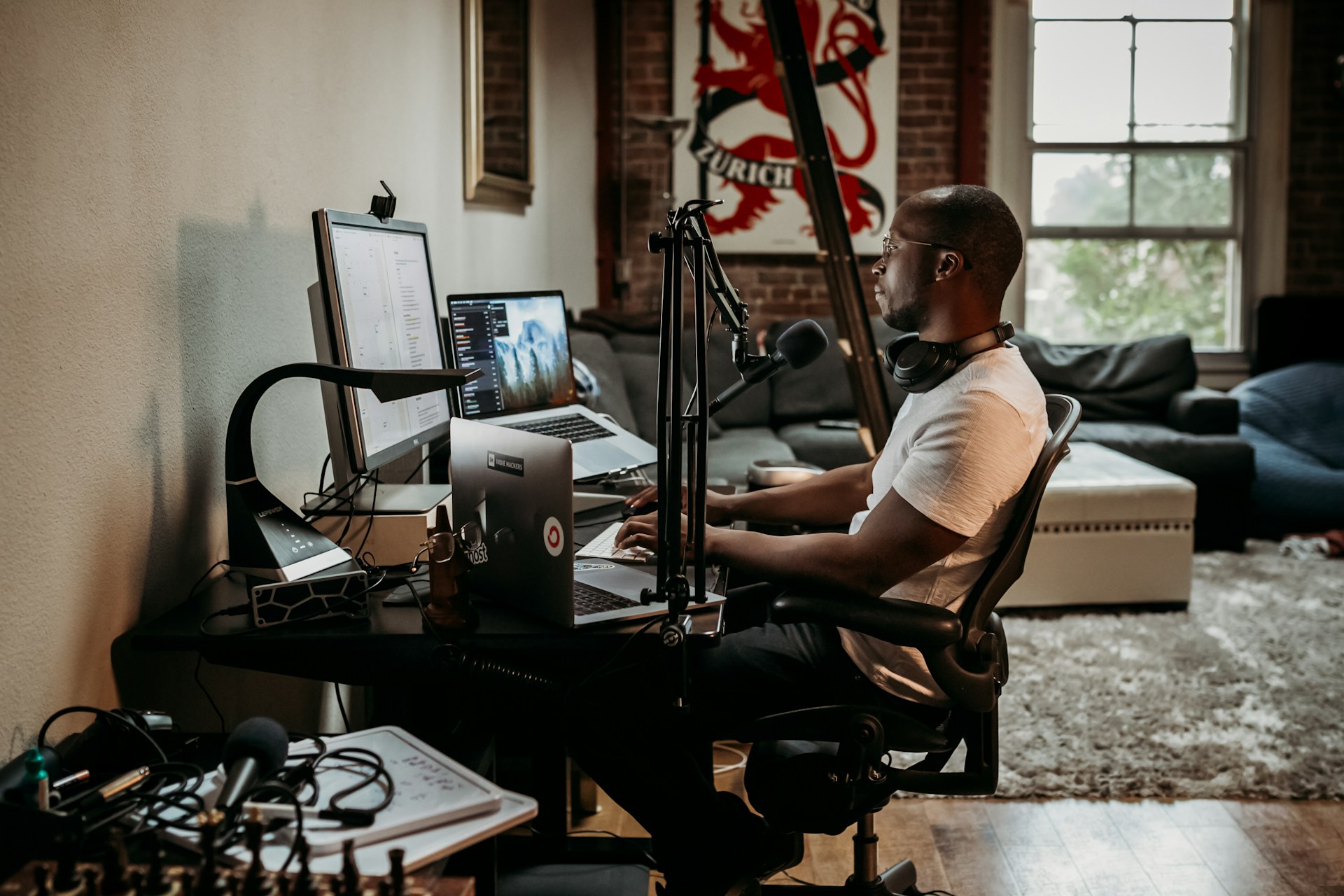 Photo by ConvertKit on Unsplash
How AI voice generation actually works
Understanding the technology helps you use it better. The short version: AI voice generators are trained on enormous datasets of audio from a specific person. The model learns that person's vocal characteristics, speech patterns, cadence, and emotional range. When you type text, the model generates audio that captures those learned patterns.
Quality varies based on training data. A celebrity with thousands of hours of public audio produces a more accurate AI model than someone with limited recorded material. Politicians who've given hundreds of speeches, actors with decades of film work, comedians with years of podcast episodes, these are the voices that AI models reproduce most accurately.
The practical implication for Gujarati creators is important. The best AI voice models are overwhelmingly built on English-speaking celebrities. Trump's AI voice is exceptional because of the sheer volume of Trump audio available, rallies, interviews, debates, press conferences. Obama's voice benefits from eight years of presidential speeches and a post-presidency public presence. Morgan Freeman's narrator voice draws on fifty years of distinctive narration work.
When you use these tools, you're accessing that distilled voice model. The text you type gets converted into audio that sounds remarkably like the real person. The more distinctive and recognizable a voice is, the better this works for content.
Why celebrity voices work for Gujarati content
Gujarati audiences, like audiences everywhere, are embedded in global media culture. They know what Trump sounds like. They recognize Morgan Freeman's voice from a dozen movies. They've heard Joe Rogan's podcast clip on YouTube. These voices carry instant recognition, credibility associations, and comedic potential.
The creative opportunity is in the contrast. A Trump voice delivering business advice in the style of Gujarati merchant wisdom is inherently funny. A Morgan Freeman narration describing a Navratri celebration adds instant cinematic gravitas. An Obama AI voice endorsing a local Ahmedabad startup creates the kind of unexpected juxtaposition that gets shared.
Gujarati creators are using these tools exactly this way. The voice is the hook. The cultural content is the payload. Together, they produce something that travels across the Gujarati diaspora precisely because it combines global recognition with local resonance.
Best celebrity voices for Gujarati content
Not every celebrity voice works equally well for Gujarati content. Some voices have broader recognition. Some carry specific associations that enhance certain types of content. And some simply sound better in the kinds of scripts Gujarati creators are writing.
Here's how the top voices actually perform.
Trump for business and political content
The Trump AI voice is extremely effective for business-focused Gujarati content. There's a natural fit between Trump's braggadocious business persona and the entrepreneurial tradition of Gujarati culture. Content that puts Trump in conversation with Gujarati business principles, the Jain merchant ethics of long-term thinking and community ties, or the Ambani-style thinking about massive scale, generates genuine engagement.
The voice also works well for political satire. Gujarati communities have strong political opinions, both in India and internationally, and content that uses the Trump voice to comment on business policy, trade relations, or the intersection of international politics with South Asian business interests can find a substantial audience.
Scripts work best when they lean into Trump's natural emphases. He speaks in superlatives. He circles back. He builds to a point through repetition. Writing for this voice means matching those patterns, and the result sounds much more authentic than if you write generic political-speech prose.
Morgan Freeman for spiritual and cultural content
Morgan Freeman's narrator voice is the best choice for spiritual and cultural content that Gujarati creators produce a lot of. Narrations about Hindu scripture, Jain philosophy, the history of Gujarat, the stories behind Navratri, these topics benefit enormously from a voice that carries natural authority and gravitas.
The voice also works exceptionally well for documentary-style content about Gujarati business history. Stories of the Birla family, the cotton trading dynasties of Surat, the diamond industry of Surat (which processes more than 90% of the world's diamonds), the entrepreneurial migration stories of East African Gujaratis, all of these have cinematic potential, and Freeman's voice gives them the weight of a prestige documentary.
Obama for educational and inspirational content
The Obama AI voice is a strong choice for educational content, motivational videos, and anything that requires a calm, measured authority. Obama's speech patterns, the pauses, the careful construction, the emotional availability, translate well to teaching content about business, entrepreneurship, and personal development.
Gujarati creators building education channels find this voice especially useful for tutorial-style content where you want the audience to trust the information being delivered. The voice implies careful thought and credibility.
Joe Rogan for podcast-style content
Joe Rogan's voice works for the podcast format that's increasingly popular with Gujarati business creators. Long-form conversational content about entrepreneurship, health, motivation, and business strategy are natural fits. The Rogan voice implies authenticity and exploration, which pairs well with the kind of personal-story-based content that Gujarati business influencers produce.
Jordan Peterson for philosophy and culture
Jordan Peterson's voice suits philosophical and cultural analysis content well. Gujarati culture has deep intellectual traditions, from Jain philosophy to the merchant class's approach to business ethics. Content that examines these traditions through an analytical lens, comparing Jain concepts to Western philosophy, or exploring the psychological dimensions of Gujarati entrepreneurial culture, benefits from Peterson's measured, intellectually serious delivery.
 Photo by ConvertKit on Unsplash
Elon Musk for technology content
The Elon Musk AI voice is increasingly popular with tech-focused Gujarati creators. Gujarat has produced significant technology entrepreneurs, and the community has deep ties to the US tech industry. Content about AI, electric vehicles, space technology, and the future of business resonates with Gujarati tech audiences. The Musk voice adds the authority of the world's most prominent tech figure to this content.
MrBeast for younger Gujarati audiences
For creators targeting younger Gujarati audiences, especially on TikTok and YouTube Shorts, MrBeast's voice brings immediate recognition and energy. Challenge-format content, giveaway-style videos, and high-energy explainers work well with this voice. The format travels well across the Gujarati diaspora because the MrBeast content model is globally understood.
Writing scripts that work for Gujarati audiences
The voice is only half the equation. The script determines whether your content actually lands. Good AI voice content needs scripts written specifically for the voice you're using, for the audience you're targeting, and for the cultural context you're working in.
Match the voice's natural patterns
Every celebrity voice has distinctive speech patterns. The AI model replicates those patterns, which means your script needs to work with them, not against them. Trump uses short declarative sentences, rhetorical questions, and repetition. Morgan Freeman builds long, flowing sentences with a storyteller's rhythm. Obama uses more complex sentence structures with careful parallel constructions.
When your script matches the voice's natural patterns, the output sounds significantly more realistic. When it fights against them, you get audio that technically sounds like the celebrity but feels slightly off. Audiences notice this even when they can't articulate exactly what's wrong.
The simplest fix: before writing your script, spend fifteen minutes watching or listening to the celebrity you're planning to use. Listen specifically for their sentence length patterns, their habitual phrases, their pacing, and their emotional range. Then write for those characteristics.
Cultural specificity beats generic universality
The Gujarati content that performs best doesn't aim for generic appeal. It leans hard into specific cultural references, specific places, specific business contexts, specific community dynamics. A Morgan Freeman narration about "the diamond cutters of Surat" is more compelling than a narration about "the hardworking people of western India." The specificity is the content.
When you're using AI voices for Gujarati content, treat the celebrity voice as the hook and the cultural specificity as the substance. The Trump voice gets people to click. The specific, accurate, culturally resonant content keeps them watching.
Write for listening, not reading
This matters more than most creators realize. Text that reads well on the page often sounds unnatural when spoken. Long, complex sentences that work in written prose sound confusing when heard. Short punchy sentences sound even stronger when spoken aloud.
Before finalizing any script for AI voice generation, read it aloud yourself. Listen for anything that sounds awkward. Listen for sentences that run too long. Listen for places where a pause would help comprehension. Then fix those problems in the script before you generate the AI audio.
Pause markers and natural rhythm
The best AI voice content uses the text itself to create natural-sounding pauses. Full stops create shorter pauses. Commas create brief rests. You can also use ellipses (...) to force longer pauses where the AI would otherwise rush. These techniques matter more in long-form content where the pacing needs to feel conversational rather than mechanical.
For Gujarati business content especially, where the audience often expects a teaching pace with time to absorb information, getting the pause and rhythm right is the difference between professional-quality audio and something that feels rushed.
Use cases driving Gujarati AI voice adoption
YouTube: Business and entrepreneurship channels
The dominant use case for Gujarati AI voice generators is business education on YouTube. The Gujarati entrepreneurial tradition runs deep, and there's enormous appetite for content about starting businesses, scaling operations, managing finances, and thinking about wealth creation.
Channels using celebrity voices for this content have found that the hook of the recognizable voice dramatically increases click-through rates on thumbnails. A Morgan Freeman narration about "The Secrets of Gujarati Business Success" gets more clicks than the same content with a generic TTS voice. And the production quality difference keeps viewers watching longer, which improves the YouTube algorithm performance.
The most successful format: use the AI voice for the main narration, overlay it with graphics, footage, and text callouts, and use your own voice or other AI voices for supporting segments. The hybrid approach gives you production flexibility while maintaining the quality of the primary narration.
Browse the full voice library on TryAIVoices to find voices that match your channel's tone and audience expectations.
TikTok and Instagram Reels: Comedy and cultural content
Short-form content for Gujarati audiences has found a specific formula that works. The format combines a recognizable celebrity voice with a Gujarati cultural situation or reference. The unexpected juxtaposition is the comedy. The cultural specificity is what makes it shareable within the community.
Examples that have worked: Trump explaining Navratri dance moves. Morgan Freeman narrating a typical Gujarati family dinner negotiation. Obama delivering a commencement speech at a Jain wedding. The content works because the audience knows both the celebrity voice and the cultural context, and the collision between them creates comedy.
For this content type, scripts should be short, punchy, and very specific. The best TikTok AI voice content is 20-45 seconds. Every second needs to earn its place. Write a tight script, generate clean audio, and edit the visual content to match the voice track.
Check out the library of political voices and celebrity voices for options that fit comedy and cultural content.
Podcast production for business audiences
The Gujarati business podcast format is growing. Long-form audio content about entrepreneurship, investment, and business strategy targets diaspora communities with high disposable income and strong interest in building wealth.
AI voice generation allows creators to produce podcast-style content without expensive recording setups. The Joe Rogan voice or Jordan Peterson voice works well for monologue-style business content. You write the script, generate clean audio, add minimal production elements, and publish.
The quality question: AI-generated podcast content has gotten good enough that regular listeners often don't notice it's not a human recording. The key is script quality. Great scripts generate great audio. Weak scripts expose the limitations of any voice generation tool.
Explainer videos for Gujarati businesses
Businesses targeting Gujarati consumers, whether that's local businesses in Leicester or Houston, or companies trying to reach Gujarati audiences across India and the diaspora, need professional voiceovers for explainer videos, product demonstrations, and marketing content.
AI voice generation is dramatically cheaper than hiring voice actors for each piece of content. A business that needs ten different explainer videos in various formats can generate all the voiceovers in an afternoon rather than spending weeks coordinating with voice actors, managing revisions, and paying per-project fees.
The Morgan Freeman voice works especially well for prestige brand marketing. The Obama voice is effective for community-focused businesses that want to convey trustworthiness. The Trump voice can work for businesses that want to project boldness and confidence in their market claims.
 Photo by Soundtrap on Unsplash
Understanding the free vs. paid question
The keyword "free" appears in a lot of searches around Gujarati voice AI tools, and it's worth addressing honestly. The landscape of tools divides roughly into three categories.
Open-source and free tools do exist. These include tools built on freely available TTS models, older text-to-speech libraries, and some web tools that offer limited free generation. The quality tradeoff is real: free tools typically have more robotic-sounding output, limited voice options, slower generation, and often significant restrictions on commercial use.
Freemium tools offer some free generation with paid tiers unlocking better voices, higher quality, and more output. These can be useful for testing, but the free tiers are usually too limited for consistent content production.
Subscription-based tools like TryAIVoices are built for creators who need consistent, high-quality output. The voice library is larger. The audio quality is significantly better. And the commercial usage terms are clearer. For creators building channels or businesses that need reliable voiceover production, the subscription model makes economic sense when you compare it to the alternative of hiring voice actors.
The honest answer to "is there a free Gujarati AI voice generator" is: there are free tools, but they won't give you the quality needed for content that competes in today's environment. The creators building successful Gujarati channels are using tools that cost money precisely because quality matters for audience retention and channel growth.
Technical tips for better AI voice audio
Input text preparation
The quality of your AI-generated audio depends heavily on how you prepare your input text. A few practices consistently improve output.
Spell out numbers and abbreviations. AI voice models handle "ten thousand rupees" better than "10,000 rupees" or "10K rupees." Write out "for example" rather than "e.g." Write "Navratri festival" not "the Nav festival." The model reads literally and abbreviations often produce awkward pronunciation.
Punctuation controls pacing. A period after each sentence creates natural breaks. Commas within sentences create briefer pauses. Use this deliberately to control how fast the voice moves through your content.
Avoid unusual proper nouns without phonetic guidance. Gujarati place names like "Ahmedabad," "Surat," "Rajkot," and "Vadodara" may not be in the AI model's training data. Some tools let you add pronunciation guides. For others, you may need to use phonetic approximations or simply test the output and adjust.
Audio post-processing for professional quality
Raw AI voice output benefits from processing. A few basic steps make a significant difference.
Normalize the audio to a consistent volume level. AI voice generators sometimes produce output with slight volume variations. Normalizing to around -3dB peak ensures consistent listening volume.
Add minimal reverb to give the voice a sense of space. Completely dry audio sounds like someone reading into a cardboard box. A small room reverb preset in any audio editing tool adds warmth without making it sound like the voice is in a cathedral.
Cut or reduce low frequencies below 100Hz. Most voice content sounds cleaner when the deep rumble is removed. A simple high-pass filter in Audacity, GarageBand, or any audio editor handles this in seconds.
Finally, consider compressing the audio slightly to even out the dynamic range. Celebrity voices often have dramatic dynamic swings, which is part of what makes them expressive. But for voiceover content, you want more consistency. Light compression keeps the voice audible without the listener having to constantly adjust their volume.
Matching audio to video pacing
The biggest technical mistake AI voice content creators make is treating the voice as secondary to the video. In practice, the voice determines the pacing, and the video needs to match it.
Generate your AI audio first. Then edit your visuals to match the audio timing. This is the opposite of how many creators work, and it produces significantly better results. When visuals are cut to match the voice, the content feels intentional and professional. When the voice is pasted onto pre-edited video, there's always a disconnect.
This is especially important for Gujarati educational content where you're making complex points about business strategy or cultural concepts. The audience needs time with each idea. The voice pacing determines how much time they get. Build the video around that pacing.
 Photo by Soundtrap on Unsplash
Platform-specific strategy for Gujarati AI voice content
YouTube optimization
YouTube rewards content that generates both clicks and sustained watch time. For Gujarati AI voice content, this means:
Thumbnails that make the celebrity voice obvious. If you're using Trump, put Trump's face on the thumbnail alongside clearly Gujarati visual elements. The juxtaposition is the hook. Make it obvious.
Titles that combine the celebrity voice with the Gujarati audience angle. "Trump's Advice for Gujarati Business Owners" outperforms both "Trump Business Tips" (too generic) and "Gujarati Business Advice" (no hook). The combination targets a specific audience with a specific hook.
Chapter markers help with longer content. Gujarati educational content often runs 15-30 minutes. Chapter markers let viewers navigate to the specific sections they want, which improves the overall watch time percentage because people can return to specific parts rather than rewatching the whole video.
End screens linking to related content on your channel keep viewers in your ecosystem. If you're building a Gujarati business channel, your end screens should link to other business content you've created, not to generic related videos.
TikTok and Instagram Reels optimization
Short-form Gujarati content has different requirements. The hook has to come in the first two seconds. No exceptions. The audience makes the decision to keep watching or scroll within the first two seconds, and AI voice content that starts with setup or context loses viewers before they've even heard the interesting part.
Start with the most surprising or funny element. If you're using a Trump voice on a Navratri topic, open with Trump saying something in the style of Navratri commentary. Don't build to it.
Captions are essential. A large percentage of TikTok viewing happens with sound off. Your AI voice content needs on-screen captions or text overlays that convey the key points even when the audio isn't playing. For Gujarati diaspora audiences, mixing Gujarati text with English captions can signal cultural belonging immediately.
Cross-post systematically. Content that does well on TikTok often performs on Instagram Reels and YouTube Shorts as well. The Gujarati diaspora audience overlaps across platforms, but different community members concentrate on different apps. Publishing across all three platforms with the same content maximizes reach.
Facebook Groups and community distribution
Gujarati diaspora communities are particularly active in Facebook Groups. Regional groups for Gujarati communities in Leicester, Houston, New Jersey, and Nairobi have tens of thousands of members with high engagement. Content that gets shared in these groups can reach specific, targeted audiences directly.
AI voice content works well in this distribution channel because it's easy to share. A 60-second video with a Trump voice commenting on Gujarati business culture gets shared in group threads because it's funny, recognizable, and culturally specific. Shared content brings viewers to your channel or page, where they can find more of your work.
Legal and ethical considerations for Gujarati creators
AI voice generation exists in a developing legal landscape. A few practical principles help navigate it responsibly.
Use for parody and commentary, not deception. Using a Trump AI voice to parody Trump's positions or create clearly satirical content is legally distinct from creating content that could be mistaken for the real person's actual statements. Keep your content clearly in the parody and commentary category.
Be transparent when asked. If your audience asks whether a voice is AI-generated, being honest about it maintains trust. Most audiences are aware that AI voice technology exists and don't have strong objections to its use in entertainment content. Deception creates much larger problems than transparency.
Commercial use rights matter. Different AI voice generation platforms have different terms of service around commercial use. If you're creating content that generates revenue, whether through YouTube ad revenue, brand sponsorships, or direct business marketing, verify that your tool's terms allow commercial use.
Avoid defamation. Creating AI voice content that makes a real person appear to have said something harmful, false, or damaging crosses from satire into legal risk. Keep content clearly in the territory of humor, parody, and commentary.
The Gujarati content community in particular tends to be cautious about legal exposure. The merchant tradition values long-term reputation and relationship, which is actually good guidance for thinking about AI voice content: don't create something for a short-term viral hit that damages your channel's reputation or creates legal risk.
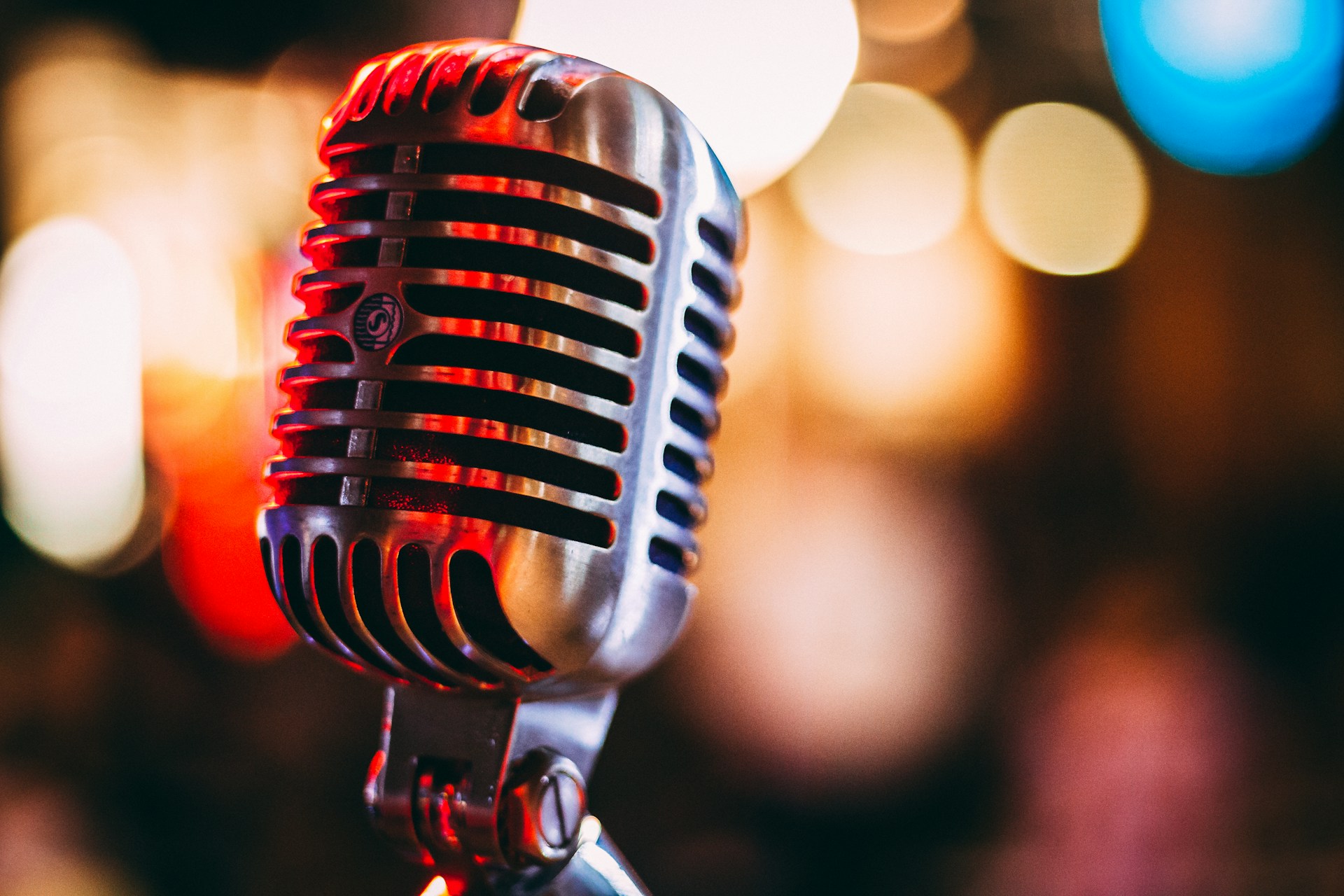 Photo by Israel Palacio on Unsplash
Getting started with Gujarati AI voice content
The path from zero to producing quality Gujarati AI voice content is shorter than most creators expect.
Start by picking one voice and one content format. Don't try to use five different celebrity voices across three different content formats in your first month. Pick the voice that best matches your content type, whether that's Morgan Freeman for narrative content or Trump for business commentary, and practice writing scripts for that voice.
Write three complete scripts before you generate any audio. This forces you to develop your scripting skills without the feedback loop of immediately hearing results. Scripts that you write and revise before hearing them tend to be significantly better than first drafts generated on the fly.
Generate audio and listen critically. The first time you hear your script in the celebrity voice, you'll hear the awkward phrases, the sentences that don't fit the voice's natural patterns, and the places where the pacing feels wrong. Take notes. Revise the script. Regenerate. The iteration process improves quickly.
TryAIVoices gives you immediate access to all 500+ voices without having to jump between tools. Browse the voice library to explore options, or go directly to the voices most relevant for Gujarati content: Trump, Obama, Morgan Freeman, Joe Rogan, and Elon Musk.
Start with a short piece of content. A 30-second TikTok is more forgiving than a 20-minute YouTube video. Get comfortable with the whole production process at small scale before you invest significant scripting and editing effort into long-form content.
Then publish. The audience feedback you get from real viewers telling you what they liked, what felt off, and what they want more of is worth more than any amount of internal testing.
Comparing AI voice tools for Gujarati content creation
The AI voice tool market has grown rapidly, and different platforms have different strengths depending on what Gujarati creators actually need.
The key variables to evaluate: voice library size, audio quality, generation speed, commercial use rights, and the overall interface quality for content production workflows.
Voice library breadth matters because you'll want to experiment and find which voices resonate with your specific audience. A platform with 50 voices gives you less flexibility than one with 500+.
Audio quality is the variable that determines whether your content sounds professional. The difference between high-quality AI voice output and mediocre output is immediately audible. High-quality output requires less post-processing and holds up better in content that runs alongside high-production-value video.
Generation speed becomes important once you're producing content at volume. Waiting several minutes per generation breaks your creative flow. The best tools generate audio in seconds.
Commercial use rights are essential if your content generates revenue. Read the terms carefully before building a business on any platform.
TryAIVoices is built specifically for content creators who need the combination of high voice quality, broad library, fast generation, and clear commercial terms. The pricing page has details on subscription tiers.
Frequently asked questions
Can I generate Gujarati language audio with AI voice tools?
Most premium AI voice tools, including the celebrity voice generators on TryAIVoices, are optimized for English. If you type Gujarati script or Gujarati-language text, results vary significantly by platform. Some tools handle Gujarati reasonably well. Others produce poor output. The most reliable approach for Gujarati creators is to use English-language celebrity voices for the hook and entertainment value, then add Gujarati-language context through subtitles, text overlays, or your own narration.
Which celebrity voice works best for Gujarati business content?
The Morgan Freeman voice is widely regarded as the best for serious business educational content because the voice carries natural authority. The Trump voice works better for energetic, opinionated business commentary content. For analytical content about business strategy or culture, the Jordan Peterson voice gives you an intellectually serious tone. Test a few options against your specific content type to see what your audience responds to.
How long should my Gujarati AI voice scripts be?
Script length depends entirely on the platform and format. For TikTok and Instagram Reels, aim for 30-60 seconds of audio, which translates to roughly 80-150 words. For YouTube long-form content, 15-25 minutes of audio is the sweet spot for Gujarati educational channels, which means scripts of 2,500-4,000 words. For YouTube Shorts, target 45-60 seconds. Match your script length to the platform's optimal video length, not to how much you want to say.
Is AI voice content appropriate for religious or spiritual Gujarati content?
This depends on the community and context. Gujarati Jain communities and Hindu communities have active discussions about appropriate use of technology in religious contexts. Using celebrity voices for religious content is different from using AI for general cultural content. A Morgan Freeman narration of a scripture story is likely to be received differently than a Trump voice on the same topic. When creating religious or spiritual content, prioritize the sensibilities of the specific community you're creating for and err on the side of respectful framing.
Can I use AI voice content for my Gujarati business marketing?
Yes, and many Gujarati businesses are doing this. The key requirements are: use a platform with commercial use rights included in the subscription, keep the content clearly in the territory of advertising and promotion rather than fake endorsements, and avoid creating content that implies a celebrity has personally endorsed your business. Use celebrity voices as a creative attention-getting device in advertising, not as fake testimonials.
How do I handle Gujarati names and places in AI voice scripts?
Gujarati proper nouns can trip up AI voice models. Test your script with place names and personal names before finalizing content. If a name is mispronounced, options include: writing a phonetic approximation (for example, "Ah-mad-ah-bad" for Ahmedabad), restructuring the sentence to avoid the problematic word, or using the AI voice for the main content and recording your own voice for the specific names. The third option, a hybrid approach, is surprisingly effective because the contrast between the celebrity voice and your authentic voice can actually enhance the content.
Related voices to try
Related guides
Gujarati content creation is at an inflection point. The tools have gotten good enough that production quality is no longer determined by budget. It's determined by creativity, scripting, and the willingness to experiment with what works for your specific audience.
The Gujarati diaspora wants content that knows them. Content that references the places they're from, the business culture they grew up in, the community dynamics they navigate every day. AI voice tools give you the production quality to compete. The cultural knowledge is yours to bring.
Start creating with TryAIVoices today. Generate professional voiceovers with 500+ celebrity and character voices, built for creators who take quality seriously.